
Trampoline Sizes Guide
The guide covers how Rocheyard thinks about trampoline size ladders for US retailers, online sellers, and commercial buyers. Use it to compare common size points, understand how size changes assortment planning, and decide which range belongs in your opening order.
By Rocheyard B2B Sourcing Desk · Last updated April 28, 2026
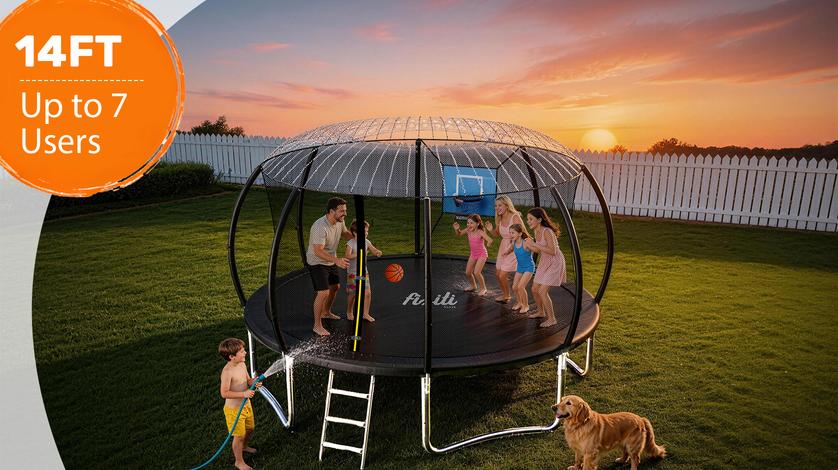
How size changes category planning
Size is one of the biggest commercial variables in trampoline buying because it affects customer expectation, packaging volume, freight cost, and how easy a model is to merchandise. A buyer who only asks for “round trampolines” is still missing a second decision: which size ladder should open the program. In practice, 9ft and 10ft often act as compact or entry-size options, 12ft and 14ft are usually the core family-use range, and 15ft or 16ft become the larger-format step-up offer.
First-time buyers should think in groups rather than isolated size claims. If a retailer wants a safe opening assortment, a 12ft and 14ft center makes more sense than a random spread across every possible diameter. If an online seller needs listing depth, a compact-small / core-family / large-step-up ladder is easier to present than disconnected size points.
| Common size | Typical role in assortment |
|---|---|
| 8ft-10ft | Compact-entry range, kids or smaller-yard positioning |
| 12ft | Main family-use core size |
| 14ft | Strong family-use and step-up core size |
| 15ft-16ft | Larger-format step-up offer |
| Rectangle and oval specialty sizes | Premium or differentiated extension lines |
What buyers should compare besides diameter
Diameter alone is not enough. Buyers should also ask how the size sits inside the category, whether the shape is round or rectangle, what the likely end-user expectation is, and whether the replacement-parts logic remains simple. A 14ft round family model and a 14ft rectangle premium model are not interchangeable just because the headline number looks similar.
In most cases, comparing size along with buyer type, channel, packaging practicality, and whether the line is supposed to be mainstream or differentiated. This is why the category pages and product pages should be read together.
How to build a first size ladder
A useful first size ladder usually starts with mainstream family-use demand, then adds one smaller or one larger point only if the buyer has a clear channel reason. Retailers often begin with a simpler ladder because floor space and inventory discipline matter. Online sellers may carry a broader ladder if they need more listing depth. Buyers should also decide whether they want a separate kids line or whether the main round family range is enough for the first season.
For a first quote, In most cases, sending the size points you are considering, the shape group, your quantity range, and your destination so the response can compare the practical options.
Relevant sources for general US safety and standards context include the CPSC trampoline guidance and the applicable ASTM standards referenced in the product-specifications guide.
FAQ
Which sizes usually open a US family assortment?
Rocheyard usually sees 12ft and 14ft act as the core family-use opening range.
Is 16ft always better than 14ft?
No. Larger is not automatically better; the right answer depends on channel, customer expectation, space, and assortment strategy.
Should kids models sit inside the same size ladder?
Not always. Kids models often work better as a separate child-focused line rather than a direct extension of the full-size family ladder.
Need help applying this to your buying plan?
Use the quote page when you want help turning this guidance into a real product shortlist or order discussion.